Aspen Short-Term Rental Regulations: What Owners Need to Know in 2026
Disclaimer:
This article provides general information about the City of Aspen's short-term rental regulations as of June 2026. It is not legal or tax advice. Regulations change; confirm requirements with the City of Aspen Community Development Department, the City Finance Department, and a qualified Colorado attorney or CPA before relying on this information for an active rental.
Aspen STR regulations at a glance (2026)
Aspen short-term rental regulations require a valid STR permit from the City of Aspen, a separate City business license, registration in the MUNIRevs portal, compliance with one of three permit types (STR-OO, STR-Classic, STR-LE), adherence to zoning rules that cap permits in certain residential zone districts, and remittance of City lodging and STR excise tax directly to the City. As of 2026, the aggregate tax burden on a Classic STR stay is 22.35% (City of Aspen, 2026; City of Aspen, 2026).
- Three permit types: STR-OO (owner-occupied primary residence — minimum 6 months/year, 120 STR nights/year max), STR-Classic (no annual night cap, zone caps apply), STR-Lodging Exempt (lodges and condo-hotels per Ordinance No. 9, Series 2022)
- Permit fees: STR-OO and STR-Classic = $394/year each; STR-LE = $148/unit per year. All in addition to a $150/year City business license.
- Renewal window: November 15 through January 14 at 5 p.m. MST in MUNIRevs
- 2026 aggregate tax rates: STR-OO and STR-LE = 17.35%. STR-Classic = 22.35%. Traditional lodge stays = 12.35%. (Per voter mandate, ≥70% of STR tax revenue funds community affordable housing.)
- Occupancy cap: Two occupants per bedroom plus two (studios: max three)
- November 2025 amendments: New STR-Temporary permit, removal of HOA affidavit at renewal, tax filing exemptions for "act of nature" emergencies, and active building permits, mandatory permit-number display in platform listings
What is a short-term rental in the City of Aspen?
The City of Aspen defines a short-term rental as the use or occupancy of a residential property or dwelling unit, in whole or in part, by the public for a fee, primarily for tourist accommodations, for a period of less than 30 days. Any rental of that length requires an STR permit, a City business license, and tax remittance. Long-term rentals (30+ days) are not subject to the STR program.
This definition matters because it covers the full range of properties Aspen owners typically consider rentable — the second home rented for two weeks a year, the investment condo rented for a full season, the lodge unit operated as a hotel. The compliance path is different for each, and that's what the three permit types address.

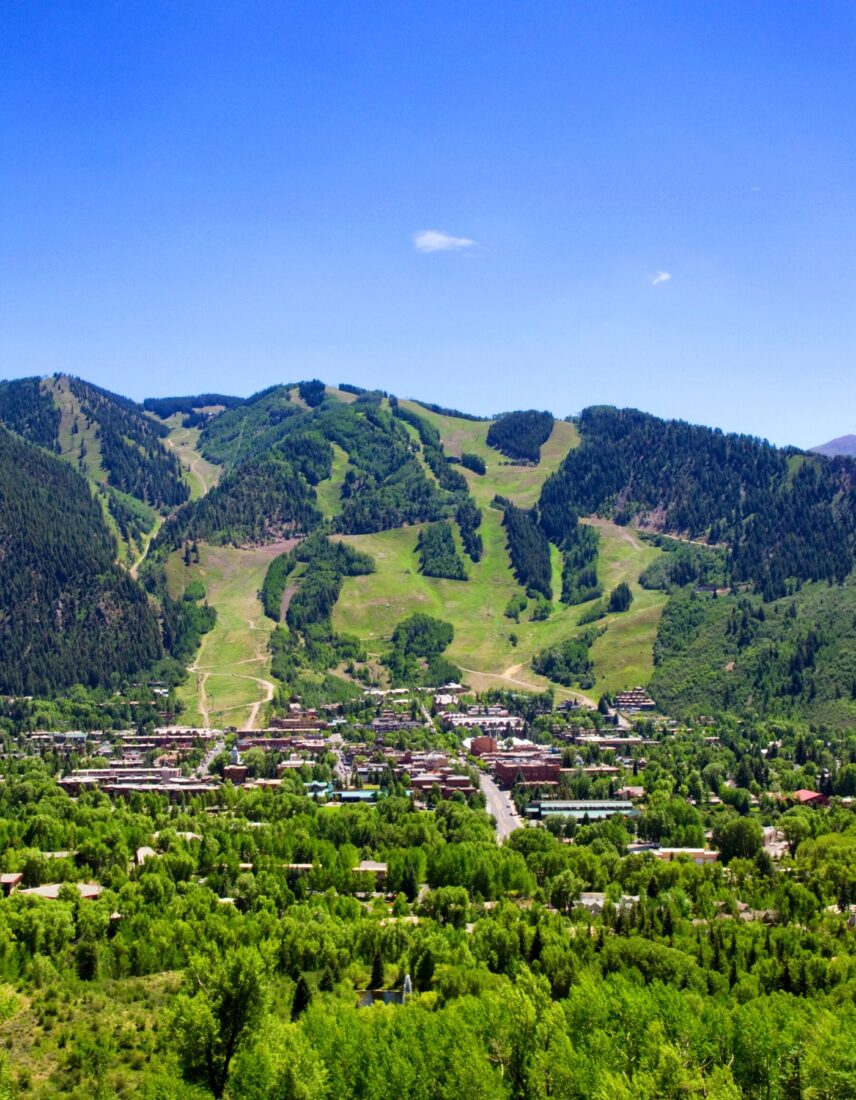
Photo Courtesy of: Crystal River Jeep Tours
The three Aspen STR permit types
Aspen's permit structure dates to Ordinance No. 9, Series 2022, adopted by City Council on June 28, 2022, and effective July 29, 2022. Owners choose the permit that matches their use:
STR-Owner-Occupied (STR-OO)
For title property owners who reside in their Aspen residential property as their primary residence for a minimum of 6 months per year. Capped at 120 STR rental nights per year. Not limited by number in any zone district where STRs are permitted. Permittee must submit two documents indicating that the STR address is their primary residence. Permit fee: $394/year plus the $150 City business license.
The STR-OO suits the owner who lives in Aspen full-time and rents the home selectively (holidays away, summer travel, event weeks).
STR-Classic (STR-C)
For non-owner-occupied properties — or owner-occupied properties that don't meet the STR-OO criteria. No annual cap on operating nights, but the permit is capped in number in residential zone districts: certain Aspen residential zones have hard caps on how many STR-Classic permits can exist at any one time. New applicants in capped zones are added to a waitlist. Permit fee: $394/year plus the $150 City business license. Property owner name required on the application; LLCs without a verifiable natural-person name are not accepted.
STR-Lodging Exempt (STR-LE)
For lodges and condo-hotels that meet the formal definition in Ordinance No. 9, Series 2022. One permit may cover the entire lodge or condo-hotel; batch tax filing is allowed. Permit fee: $148/unit per year, plus a $150 business license for both the qualified owner's representative and the owner of each property covered. Individual owners of units inside a lodge or condo-hotel are not eligible for STR-LE and must apply for STR-Classic or STR-OO instead.
Aspen STR zoning rules: which zones allow rentals?
Aspen's commercial and lodging zones permit STRs with no cap on the number of permits. The residential zone districts cap the number of STR-Classic permits; STR-OO permits remain available in residential zones where STRs are permitted, since those are tied to the owner's primary residence.
A practical implication for owners: the zone your property sits in determines whether an STR-Classic permit is currently available. In zones at or near the cap, you'll join a waitlist. The City publishes the live cap status, eligibility, and existing STR locations on the Short-Term Rental Eligibility Map, available at aspen.gov/1407. Before purchasing an investment property primarily for STR income, the zoning analysis comes before the price negotiation.
In our owner conversations, we see two patterns: owners in capped zones often choose STR-OO if their use case can fit the 120-night limit and 6-month primary-residence requirement, or pursue STR-Classic via the waitlist if they can wait out a permit turnover.
Aspen lodging and STR tax rates for 2026
Aspen layers City lodging taxes and STR excise taxes on top of City, State, county, and special-district sales taxes. The aggregate tax burden on a nightly stay starting in 2026 is:
| Property/Permit type | 2026 aggregate tax rate | Includes |
|---|---|---|
| Traditional lodge | 12.35% | All sales + lodging taxes |
| STR-Owner-Occupied (STR-OO) | 17.35% | Lodge rate + 5% STR-OO/STR-LE tax |
| STR-Lodging Exempt (STR-LE) | 17.35% | Lodge rate + 5% STR-OO/STR-LE tax |
| STR-Classic (STR-C) | 22.35% | Lodge rate + 10% STR-Classic tax |
STR tax effective date: STR tax obligations apply to all nightly stays commencing on or after May 1, 2023, regardless of when the booking was made or when payment/deposit was received. The 5% and 10% STR-specific taxes were authorized by voter Resolution 106-2022.
Voter-mandated use of STR tax receipts: Ballot language requires at least 70% of STR tax revenue to be devoted to community affordable housing efforts, with the remainder (up to 30%) going to environmental initiatives and capital repair and maintenance.
Filing deadline: Lodging tax filings are due on or before the 20th day of the month following the month in which the rooms or accommodations were provided — not the period when a reservation, payment, or deposit was received. A zero-revenue period still requires a filing.
City lodging tax and STR excise tax go to the City of Aspen. Sales taxes are remitted to the Colorado Department of Revenue. Owners using a property management company typically have their manager handle tax remittance; owners self-managing need to register and file independently.

Occupancy limits, life safety, and operational rules
Beyond the permit and tax structure, Aspen STR ordinances set operational requirements every owner needs to meet:
- Occupancy cap: two occupants per bedroom plus two. A 4-bedroom home is capped at 10 occupants; a 6-bedroom home at 14. Studios are capped at three.
- Non-transferability: STR permits do not transfer with the sale of the property under the original 2022 ordinance. The new owner applies fresh. (The November 2025 amendments introduced the STR-Temporary permit — see below — to handle the pre-existing-reservations edge case.)
- Life safety requirements: Smoke alarms, carbon monoxide detectors, fire extinguishers, and other life safety provisions per the ordinance and the City building code.
- Permit number display: Per the November 2025 amendments, online listing platforms must display the property's STR permit number in any advertisement. Platforms are responsible for removing non-compliant listings.
- Compliance enforcement: The City monitors compliance through MUNIRevs records and complaint-based investigations. Penalties for operating without a valid permit range from administrative fines to permit denial.
November 2025 amendments — what changed (and what owners should track)
On November 18, 2025, the Aspen City Council approved a slate of amendments to the STR ordinance. The changes are operational rather than structural — the three-permit framework is intact — but the practical impact on owners is real:
- STR-Temporary permit (new). A new permit type for owners who recently purchased a property that came with pre-existing reservations made before the sale. STR-Temporary lets the new owner honor those bookings while applying for a permanent permit type. This addresses the non-transferability friction that had been a recurring issue at closing.
- HOA affidavits no longer required at renewal. Renewal applications previously required an HOA affidavit confirming the rental was permitted under the HOA's rules. That requirement was removed for renewals — though HOAs can still independently restrict STRs, and the owner remains responsible for compliance with the HOA.
- Tax filing exemptions for force-majeure events. Properties rendered untenable by an "act of nature" emergency may qualify for tax filing exemptions. An exemption was also added for properties with active building permits — relevant for owners in the middle of a renovation.
- Mandatory permit-number display on platforms. Online platforms (Airbnb, VRBO, Vacasa, others) are now required to display the STR permit number on listings and to remove non-compliant advertisements. The compliance burden moves partially to the platform — a meaningful enforcement shift.
- Streamlined renewal flow. Several documentation requirements were trimmed. The full renewal flow remains in MUNIRevs.
For the full 2026 calendar year, renewal applications were due November 15, 2025, through January 14, 2026, at 5 p.m. MST. Permits with $0 tax revenue in 2025 are ineligible for 2026 renewal and have been terminated — a sweep of inactive permits that the City instituted to recover capacity in capped zones.
What about Pitkin County properties outside the City of Aspen?
Pitkin County operates its own STR regulations, distinct from the City of Aspen. Many estate-class properties — particularly in the Brush Creek, Owl Creek, and Snowmass corridors — sit in unincorporated Pitkin County, not within Aspen city limits.
Pitkin County's framework parallels the City's three-permit structure with local variations on caps and tax rates. Snowmass Village operates its own STR program separately again. Before assuming City of Aspen rules apply, confirm the jurisdiction with the County Clerk or the City of Aspen Community Development Department. A property's zip code (81611) does not determine jurisdiction; the property's parcel boundary does.
This is a recurring source of confusion for owners at acquisition. The compliance bill differs materially between jurisdictions.
How a locally based agency reduces the regulatory load
Owners self-managing an STR in Aspen are responsible for: tracking permit type, paying the City business license, registering and filing tax in MUNIRevs and the Colorado Department of Revenue, displaying the permit number in every advertisement, monitoring annual cap-list movement if waitlisted, renewing within the November-January window, demonstrating active tax revenue to retain permit eligibility, complying with occupancy and life-safety rules, and tracking ordinance amendments as the City updates them.
This is a non-trivial workload for an owner who lives out of state and uses the home for only 5 weeks a year.
A locally based property management agency absorbs the compliance work — permit applications, business license maintenance, MUNIRevs tax filing, listing compliance, ordinance monitoring, and audit response. Aspen Luxury Vacation Rentals has been managing STR compliance for owners in Aspen and Snowmass since 2003. The owner-side discussion of agency vs. self-management trade-offs is detailed in 5 Reasons It Pays to Ditch Your Property Management Company.
For owners weighing the structure of their STR — whether to pursue STR-OO vs STR-Classic, how the tax math compares, and what compliance looks like at scale — the https://www.aspenluxuryvacationrentals.com/contact-us/ contact page is the entry point for a conversation with the owner-services team.

Ready to talk about your Aspen rental property?
The owner-services team handles permit, tax, and operational compliance for Aspen and Snowmass property owners. Request a complimentary rental analysis or learn how we manage Aspen's finest homes.
Frequently Asked Questions
Do I need a permit to rent my Aspen home short-term?
Yes — any rental of an Aspen residential property for fewer than 30 days at a time requires a valid STR permit from the City of Aspen, plus a separate City business license, plus tax registration in MUNIRevs. The permit must be in place before the first rental night.
Which Aspen STR permit type do I need?
If you live in your Aspen home as your primary residence for at least 6 months per year and rent it for 120 nights or fewer, STR-OO is the simplest fit. If your home is not your primary residence — or you don't meet the 6-month residency threshold — you need STR-Classic, which may have a waitlist depending on the zone. If you operate inside a designated lodge or condo-hotel, you need STR-Lodging Exempt.
What does an Aspen STR permit cost?
The City of Aspen business license is $150 per year. The annual permit fee on top of the license is $394 per year for STR-Owner-Occupied and STR-Classic, or $148 per unit per year for STR-Lodging Exempt.
What is the total tax rate on an Aspen STR in 2026?
Aggregate 2026 tax rates (including all jurisdictions' sales taxes plus City lodging and STR excise taxes): STR-OO and STR-LE rentals: 17.35% total. STR-Classic rentals: 22.35% total. Traditional lodge stays: 12.35%. The 5% and 10% STR-specific taxes apply to all nightly stays commencing on or after May 1, 2023. At least 70% of STR tax revenue funds community affordable housing, per voter mandate.
When are Aspen STR permits renewed each year?
Renewals for the following calendar year are submitted in MUNIRevs between November 15 and January 14 at 5 p.m. MST. Permits with zero tax revenue in the prior calendar year are ineligible for renewal and are terminated.
Can I transfer my STR permit to a new owner when I sell?
No — STR permits are non-transferable under the 2022 ordinance. The new owner applies fresh. The November 2025 amendments introduced an STR-Temporary permit type for new owners who need to honor pre-existing reservations during the gap between purchase and permanent permit issuance.
What if I'm in a zone with a cap on STR-Classic permits?
You join a waitlist. The City's Short-Term Rental Eligibility Map (linked from aspen.gov/1407) shows live cap status by zone, where existing STRs are located, and where STR-Classic permits remain available. STR-OO remains available in residential zones for primary-residence owners meeting the 6-month threshold.
What's the occupancy limit at an Aspen STR?
Two occupants per bedroom plus two for the unit. A 4-bedroom rental is capped at 10 occupants. Studios are capped at three.
What if my property is in Pitkin County or Snowmass, rather than the City of Aspen?
Different jurisdictions, different rules. Pitkin County and Snowmass Village each operate their own STR programs. Confirm jurisdiction with the County Clerk or City of Aspen Community Development before assuming Aspen rules apply.
Can a property management agency handle STR compliance for me?
Yes — a locally based agency in Aspen handles permit applications, business license maintenance, MUNIRevs tax filing, listing compliance, and ordinance monitoring on the owner's behalf. For owners who live out of state, compliance work is one of the main reasons to use an agency.
About this guide
Prepared by the Aspen Luxury Vacation Rentals editorial team. Primary regulatory sources: City of Aspen Short-Term Rentals official page (aspen.gov/1407) and Lodging and Short Term Rental Taxes page (aspen.gov/1427) — both fetched June 18, 2026; the City of Aspen Council news release on the November 18, 2025 STR amendments (aspen.gov/CivicAlerts.aspx?AID=897); Ordinance No. 9, Series 2022 (aspen.gov/DocumentCenter/View/11029); STR Program Guidelines (aspen.gov/DocumentCenter/View/8863); Aspen Journalism's August 2022 coverage of the original Ordinance No. 9, Series 2022. This is general information, not legal or tax advice — owners should confirm specific requirements with the City of Aspen Community Development Department, the City Finance Department, and a qualified Colorado attorney or CPA before acting.