The Complete Guide to Luxury Vacation Rentals in Aspen, CO
The best luxury vacation rentals in Aspen—those with ideal snow access, attentive concierge service, and reliable service—are rarely available for online nightly bookings.
These properties are managed year after year by a select group of local hospitality firms who understand which homes offer the best afternoon light, true ski-in/ski-out access, or a chef familiar with your family's preferences.
This guide is for the traveler who wants the real version of Aspen — not a hotel room, not an unvetted listing, but a home in an intimate setting, matched carefully to your needs. It covers what makes Aspen Luxury Vacation Rentals different from other Vacation Rental Agents. The major neighborhoods and property types, and what a full-service agency actually does day to day. Also, the practical logistics: airports, seasons, ski access, and short-term-rental rules that most guides skip.
By the end, you should know exactly how to choose a property, who to book it through, and what to ask for to make the trip easier.
What "Luxury Vacation Rental" Actually Means in Aspen
In a place like Aspen, the word luxury is everywhere. It is on hotel signage, brokerage windows, and OTA filters. Used loosely, it loses much of its meaning. Before going further, it's worth pinning down what a luxury vacation rental should actually deliver here in Aspen.
The Property
A luxury Aspen rental is a curated home that is inspected and prepared to a five-star standard. That means a property with hotel-grade linens that change for every arrival. The kitchen is fully stocked and functional. The heat and snowmelt systems work in January, and the wood floors are not gritty from a previous guest's ski boots. It is not just a beautiful listing photo — it is a home that has been audited.
The Service
The second half of luxury is invisible until you need it. A locally owned, full-service hospitality agency stands behind the property: someone answers the phone after the lifts close, the housekeeping team turns the home between back-to-back stays without missing a step, and the concierge can produce restaurant reservations, lift tickets, ski school slots, and a private chef on short notice. If a kitchen appliance fails on day two of a seven-night stay, we can dispatch a technician the same day; the guest does not become the project manager.
The Match
The third element — and the one most travelers underestimate- is the match between the home and the trip. A four-bedroom condo in Snowmass Village suits a family with young skiers who want to step out the door and onto a beginner run. A downtown Aspen Core penthouse suits two couples who want to walk to dinner. The same group, given the wrong house, has the wrong trip — even if the house itself is beautiful. National listing platforms can struggle in Aspen. Software can't replace a phone call with a local agent who has actually walked the property.
Aspen vs Snowmass: Where to Stay (And Why It Matters)
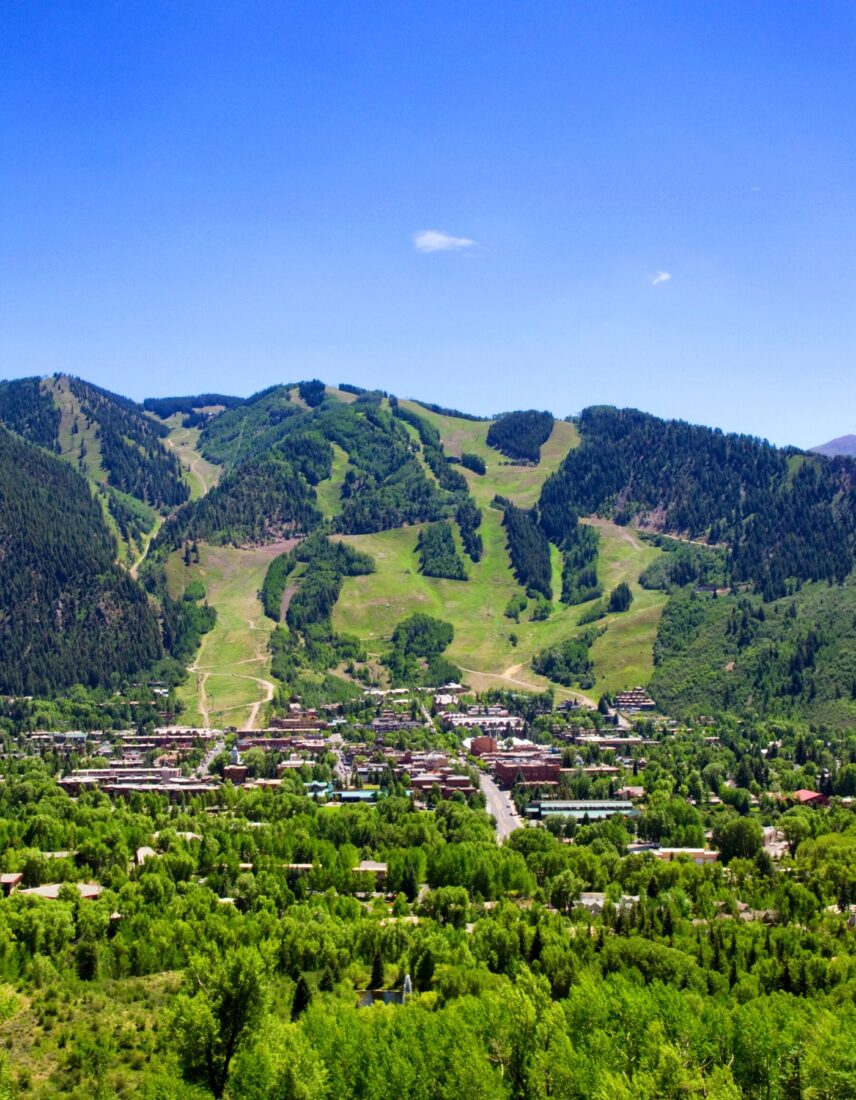
The Aspen Snowmass area is an integrated four-mountain ski resort area in the Roaring Fork Valley, and the four mountains — Aspen Mountain (Ajax), Aspen Highlands, Buttermilk Mountain, and Snowmass — are referred to collectively by Aspen Skiing Company as the Power of Four.
They share one lift ticket, but they live in two distinct towns connected by State Highway 82, with the resort village of Snowmass roughly nine miles west of downtown Aspen. Choosing between them is the single most consequential decision in planning the trip.
Downtown Aspen (Aspen Core)
Aspen Core is the historic downtown district at the foot of Aspen Mountain, eight or nine walkable blocks of Victorian-era buildings, restaurants, galleries, the Wheeler Opera House, and the Silver Queen Gondola. Staying in the Core means you can step out the door for breakfast, walk to a gallery opening, and ride the gondola without a car.
Property types here include condominiums, townhomes, and penthouses; entire single-family homes within the Core are vanishingly rare and priced accordingly. This is the right base for couples and small groups who value walkability and nightlife as much as skiing, and for guests who plan to use Aspen Mountain as the primary lift.
Red Mountain
Red Mountain is the residential ridge directly across the Roaring Fork River from downtown Aspen, often nicknamed "Billionaire Mountain" by the national press for its concentration of high-net-worth homeowners.
Recent Aspen real estate coverage has documented record-breaking sales here, including a 2024 transaction at 419 Willoughby Way that became Colorado's first residential property to cross $100 million. Properties on Red Mountain are large mountain estates with panoramic Elk Range views, secluded grounds, and total privacy. There is no walk to a lift here — but there is a 5-minute drive to Aspen Mountain — and the inventory is overwhelmingly off-platform, by request only.
Aspen Highlands
Aspen Highlands sits roughly two miles southwest of downtown Aspen and is the local skier's mountain — best known forHighland Bowl, a 270-acre hike-to powder zone topping out at 12,392 feet that draws expert skiers willing to earn their turns. The Highlands base is also home to ski-in/ski-out residences and townhomes, including some of the area's most coveted slope-side rentals. The right choice for a family with strong skiers in the household, for travelers who want immediate lift access without the downtown-Aspen price-per-square-foot, and for groups who plan to ski hard and quietly.
Snowmass Village
Snowmass Village is a separate, purpose-built mountain town a short drive from Aspen Core. The Snowmass ski area itself spans 3,342 acres of skiable terrain across 98 trails, with a base elevation of 8,104 feet and a summit reaching 12,510 feet, the largest of the four mountains by far, and the one most consistently rated among the best family ski resorts in North America. The Village offers ski-in/ski-out condominiums, townhomes, and slope-side estates, plus a pedestrian-friendly Base Village with restaurants, shops, an ice rink, tubing, and the Treehouse Kids' Adventure Center. For families with new or intermediate skiers, Snowmass is usually the better fit than the Aspen side.
Old Snowmass and Woody Creek
Outside of these primary areas, properties also exist in Old Snowmass (a quiet ranch-style valley five to seven miles down-valley from Snowmass Village) and Woody Creek (the famously bohemian community made well-known by writer Hunter S. Thompson, about eight miles north of Aspen). Both are small markets with a handful of large, curated homes, well-suited to guests who specifically want privacy and space and are happy to drive to ski areas.
Property Types and What They Suit
Not every "luxury vacation rental" works for every group. Below are the property categories you will encounter in a vetted Aspen portfolio, along with the trips they fit.
Mountain Estates
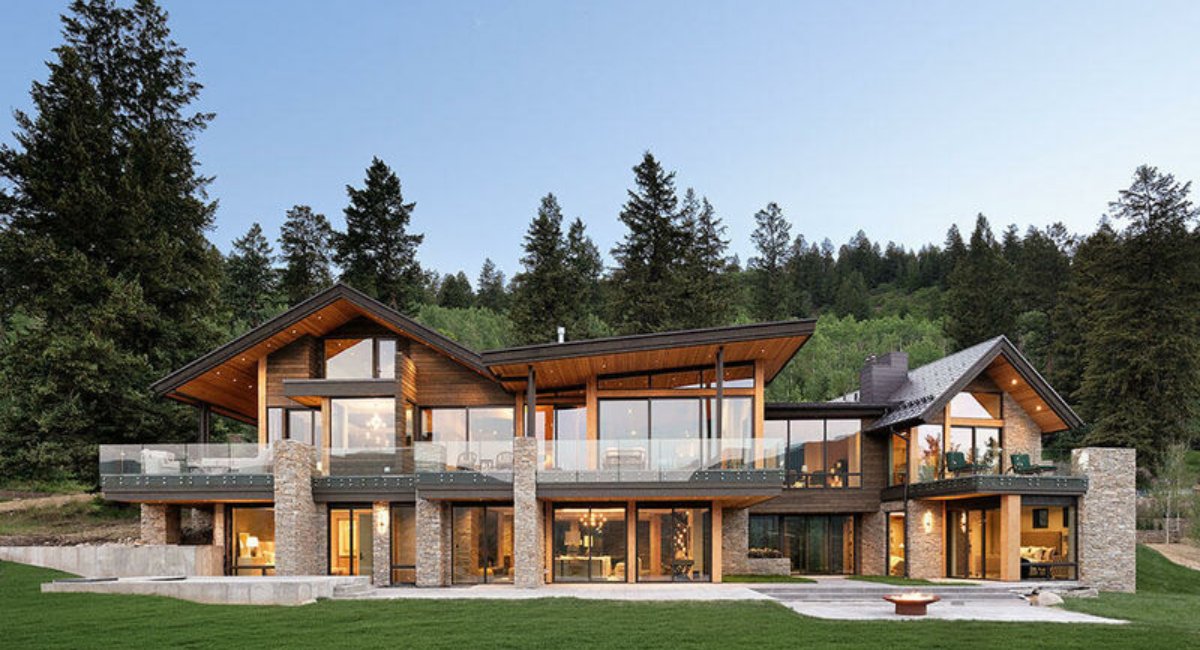
Five to ten bedrooms, 6,000–15,000 square feet, often on a multi-acre lot with a hot tub, multiple living rooms, a chef's kitchen, a dedicated ski room with boot dryers, and frequently a separate guest house. Estates are concentrated on Red Mountain, in Starwood, in Upper West Aspen, and in the Highlands. They are the right product for family reunions, multigenerational holidays, weddings, and corporate retreats.
Ski-In/Ski-Out Townhomes and Chalets
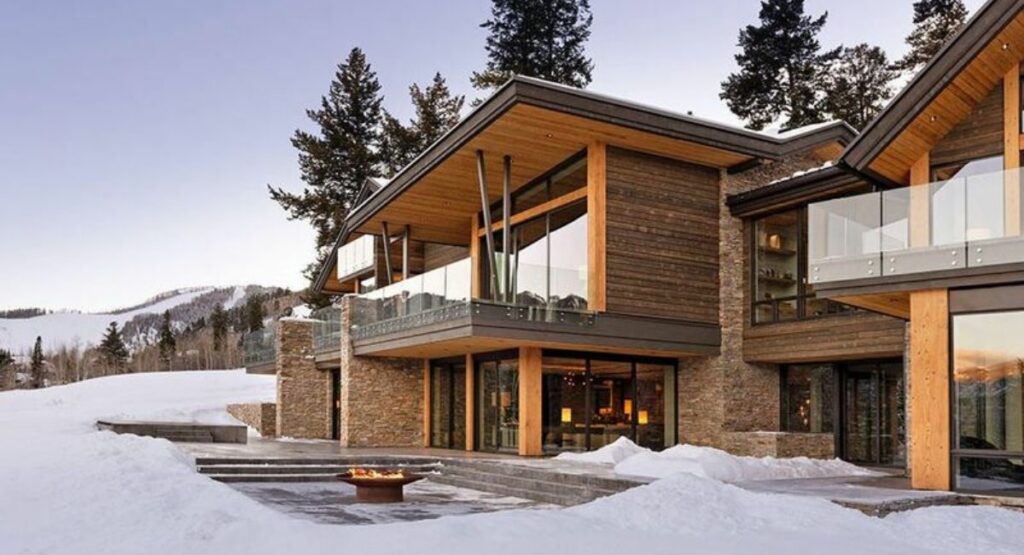
Source – The Tiehack Home
Three to six bedrooms, slope-side or steps from a lift. The largest concentration of true ski-in/ski-out inventory in the area sits in Snowmass Village (slope-side townhomes and slope-side estates); Aspen Highlands has a smaller, more selective group; and the Aspen Mountain side has very few true ski-in/ski-out properties, given the geography. These rentals are ideal for skiers who refuse to drive every morning and for families with young children, where the difference between "fifty steps to the lift" and "ten-minute drive plus parking" defines the day. Aspen Luxury Vacation Rentals maintains a curated collection of these properties on its ski-in/ski-out page.
Aspen Core Penthouses and Condominiums
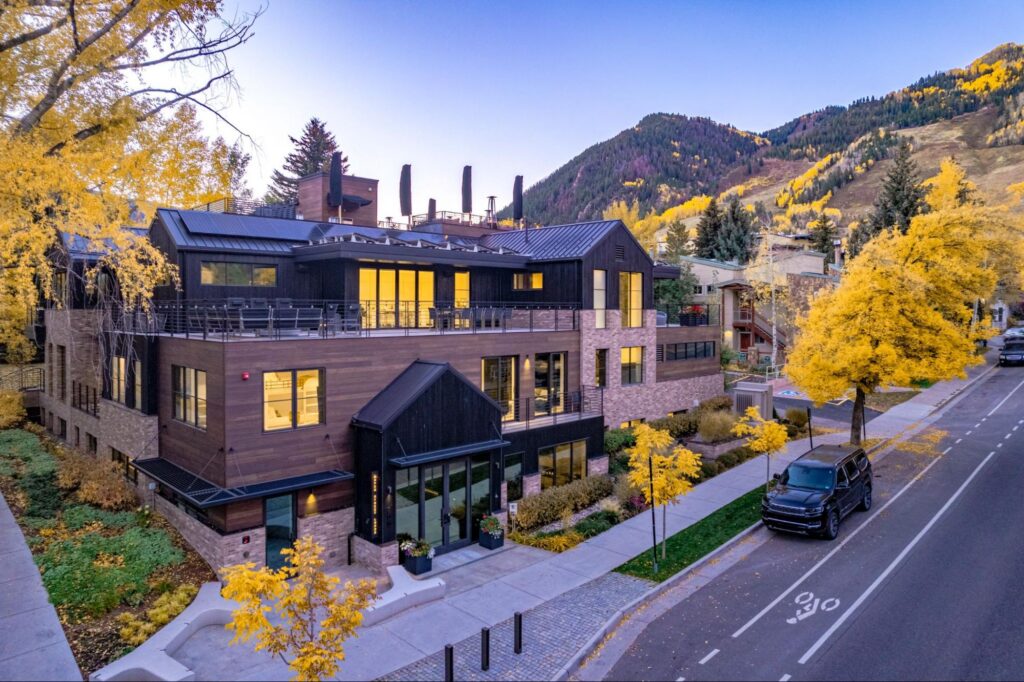
Two to four bedrooms (occasionally larger) inside walkable downtown Aspen, often with rooftop decks, hot tubs, and direct sightlines to Aspen Mountain. Penthouses above the historic Isis theater building, residences at the Hyatt Grand Aspen and the Ritz-Carlton Residences, and several contemporary core townhomes fall into this category. Best for couples, two-couple trips, and small families who want to walk to dinner.
Family Condominiums in Snowmass
Two to four bedrooms in slope-side complexes such as the Havens, Aura, or comparable buildings. These are functional, family-grade rentals — bunk rooms, ski lockers, on-site pools and hot tubs — that prioritize convenience and pricing over the outsize square footage of an estate. In addition, Snowmass features more ski-in/out accommodations than Aspen and a more 'ski resort village' feel. And while both areas offer plenty of family-friendly activities, Snowmass is generally considered a bit more family-oriented overall.
What "Full-Service" Actually Includes
The term "full-service" is thrown around loosely in vacation rentals. In Aspen, it has a specific meaning: a single locally based company is responsible for the property and the guest experience, end to end. In practice, that includes the items below — most of which are invisible to a guest until something goes wrong.
Pre-Arrival Coordination
Before the trip, a full-service agency will pre-book whatever the trip needs: airport transfers from Aspen-Pitkin County Airport (ASE), grocery delivery to stock the kitchen at check-in, lift tickets, ski school slots, equipment rentals, restaurant reservations, spa appointments, and event tickets. We provide a property directory specific to the home so guests know how the heated driveway, the Sonos, and the boiler controls actually work.
In-House Concierge (Complimentary)
A genuine differentiator of a full-service agency is a concierge team that is part of the company, included in the rental, and does not rely on a third-party app. Aspen Luxury Vacation Rentals' concierge services coordinate personal chefs, private ski and tennis instructors, private limousine service, luggage delivery, equipment rentals, restaurant reservations, show tickets, and tee times. The concierge is on call during the stay and serves as the single point of contact, rather than a chain of unrelated vendors.
24/7 Maintenance and Housekeeping
Properties at this price point should never be guest-managed. Housekeeping follows a detailed turnover checklist reviewed by a head housekeeper for every stay. Maintenance is on call around the clock — the test of a good agency is not whether problems happen (they do, in mountain houses, in winter) but how quickly they are resolved. The right standard is that a guest should not have to escalate, repeat themselves, or wait through a business day for an answer.
Property Standards Behind the Scenes
Every home in a vetted portfolio is inspected before the season and walked through before each guest arrives. Linen counts, fire-safety equipment, smoke detectors, snowmelt operation, hot-tub chemistry, and outdoor lighting are all part of the audit. It's all part of "luxury" that does not photograph.
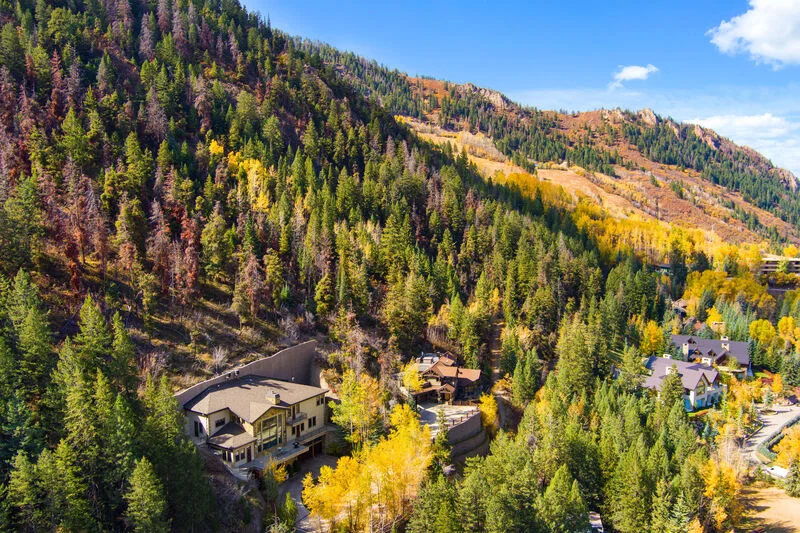
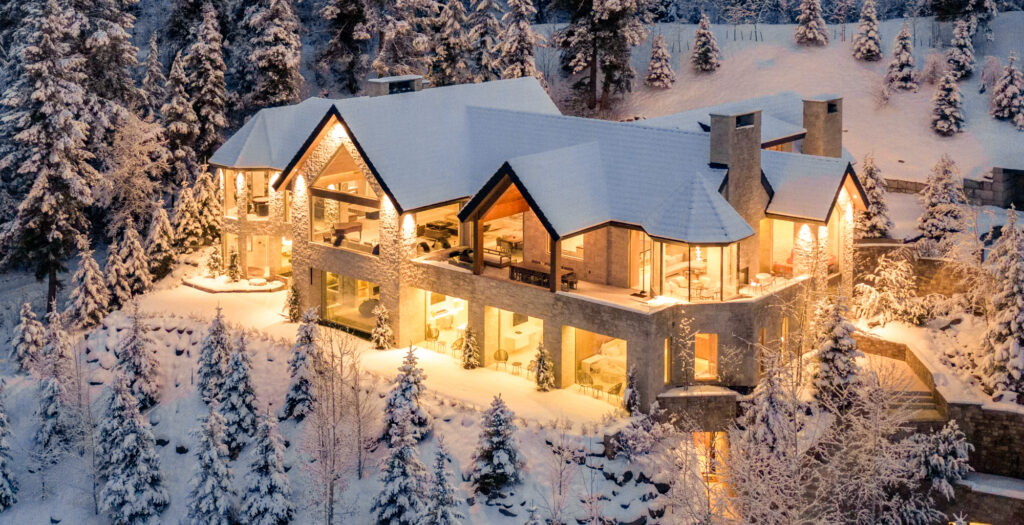
Aerial View of Ute Avenue home, nestled on the north-facing slopes of Ajax Mountain
How a Vacation Rental Compares to a Hotel in Aspen
A reasonable question for a first-time Aspen visitor is whether to book a hotel or a residential rental—both work. The decision usually comes down to group size, length of stay, and how much of the experience you want curated to your own preferences.
A luxury hotel in Aspen — the Little Nell, the St. Regis, the Hotel Jerome, and the Limelight gives you a concierge desk, a front door staffed at all hours, and the option of room service. For a couple's three-night trip, that is often the right product.
An intimate vacation rental gives you space, privacy, a kitchen, and the ability to host your own dinners, ski-day debriefs, and family movie nights without a half-dozen separate hotel keys. It also gives you a single point of accountability for the whole trip rather than splitting requests across the front desk, the concierge desk, the spa desk, and an outside ground-transport company. For a family of six, a four-couple trip, a ten-day winter break, or any group celebration, a rental is usually the better experience and — interestingly — often the better value on a per-person basis once the kitchen and the avoided room multiplier are factored in.
The comparison is also seasonal. In late June through August and in late September through November, hotel pricing in Aspen is moderate, and a hotel works fine. In peak winter weeks (Christmas, New Year, Presidents' Day, X Games, Spring Break), hotel rates rise sharply, and availability tightens; curated homes — especially those held by full-service agencies with multi-year owner relationships — often have inventory that never appears on public booking sites.
Booking and Logistics
In Aspen, pricing reflects more than square footage—it reflects access, service, and timing. During peak winter weeks, luxury vacation rentals in Aspen typically range from $3,000 to $25,000+ per night, depending on location, size, and service level. Ski-in/ski-out homes and large Red Mountain estates command the highest rates, particularly over holidays, while well-located Snowmass residences and select Aspen Core properties offer more flexibility outside peak dates.
When to Book
Peak winter (Christmas, New Year, Presidents' Day, X Games, Spring Break) typically sells out 9–12 months in advance for the larger and more sought-after homes. Mid-winter weeks, summer, and shoulder season are usually bookable 3–6 months out, with more flexibility. For the Food & Wine Classic in Aspen (the third weekend in June), high-end inventory in Aspen Core is typically committed by the prior fall.
Length of Stay
Pitkin County's short-term rental ordinance, adopted in 2022, sets a minimum stay of four days for most licensed STR properties and limits rentals to 120 days per year for many license types — guidance that is summarized on the official Pitkin County Short Term Rentals page. In practice, this means most Aspen rentals quote a four-night minimum, with a seven-night minimum during holiday weeks. A locally based agency tracks this licensing per property; an out-of-area listing platform may not.
Payment, Deposits, and Insurance
Full-service Aspen agencies typically collect a portion of the rental at booking and the balance ahead of arrival. Deposits are held in escrow accounts. A modest damage-insurance program (in Aspen Luxury Vacation Rentals' case, $5,000 of accidental-damage protection at $125) is standard and is not the same as travel insurance, which is offered separately.
Getting There
Most luxury guests fly into Aspen-Pitkin County Airport (ASE), which sits at 7,820 feet of elevation just three miles northwest of Aspen Core. ASE handles both commercial service and significant private-jet traffic. Travelers connecting on commercial flights frequently route via Denver International Airport (DEN) and either continue on a short flight to ASE or arrange a four-hour ground transfer through Glenwood Springs. The full-service concierge can coordinate either path.
Driving and Parking in Aspen
Downtown Aspen is small, walkable, and intentionally car-light. Most luxury rentals include garage parking, and many Core guests leave their cars there all week. From Snowmass Village, free shuttles run frequently into Aspen during the winter season, which is one of the underrated advantages of staying on the Snowmass side with kids.
Building the Trip Around Aspen Itself
A luxury rental is a base, not the whole trip. The Aspen Snowmass area earns its reputation across the calendar — and the right agency knows the rhythm of the year as well as the homes themselves. The Aspen Winter Guide, and snow conditions, and grooming report are the standard references for ski-trip planning.
Winter (December–March)
The headline product. Aspen Mountain favors intermediate and advanced skiers; Snowmass spans every ability level and is the family default; Aspen Highlands rewards strong skiers; Buttermilk hosts the Winter X Games on Buttermilk Mountain in late January each year. Off-snow, Aspen offers Nordic skiing, snowshoeing, snowmobiling, dog-sledding, hot-air ballooning, and a winter restaurant scene that expands in January and February.
Spring (Mid-March–April)
Spring skiing is one of Aspen's underrated experiences — long days, soft snow, lower crowd density, and a string of festivals. Mountains typically close in mid-April. The spring break guide covers the family-trip calendar.
Summer (June–August)
The Food & Wine Classic anchors the summer season in Aspen in mid-June, and the Aspen Music Festival and School, whose 2026 summer session runs from June 24 through August 23. Add hiking on the Maroon Bells trails, road and mountain biking, the Saturday Aspen Saturday Market, and evenings at the Wheeler Opera House — and summer is a complete trip in its own right.
Fall (September–October)
Aspen's quietest and most beautiful season. The aspen groves above town turn gold in the last week of September and the first week of October, hotel rates settle, and dinner reservations are easy. Many of the multi-decade rental owners come up during this window, so high-end inventory is tighter than it looks, but it's available with planning.
Why Locally Owned and Operated Matters
A quick word on the difference between locally owned full-service hospitality and the alternative. National listing platforms compete on inventory volume and software; a local full-service agency competes on depth of service, length of relationship, and intimacy of local knowledge — three things software does not provide.
Aspen Luxury Vacation Rentals has been locally owned and operated since 2003. That tenure shows up in ways that are easy to miss from the outside: it is reflected in the housekeeping team that has worked with the same homes for fifteen seasons, the concierge who has restaurant relationships in town, and the owners who renew because their properties have been managed reliably for a decade or more. Twenty-five-plus years also shape the off-platform inventory: many of the most desirable townhomes are not publicly listed because they do not need to be — the agency's existing repeat-guest base fills them. That is what an exclusive, by-request portfolio actually means. It's not a marketing line — it's how the upper end of the Aspen rental market really trades.
For owners considering moving a property into rental, the Property Management page explains the full-service model from the owner's side. The short version: a full-service agency absorbs the operational burden of running a rental at this standard; revenue management, dynamic pricing, guest screening, 24/7 maintenance, professional housekeeping, financial reporting, STR compliance, leaving the owner with predictable income and a property that is being looked after as if it were the agency's own.
How to Choose a Property: A Practical Checklist
If you are sitting with a list of candidate homes and trying to decide, the questions below have, over years of guest feedback, proven to be the ones that actually predict trip satisfaction.
Group fit. How many bedrooms do you actually need, with no doubling up of older kids? How many bathrooms? Is anyone in the group mobility-limited (in which case stairs and entry ramps matter)?
Ski day. Where are the strongest skiers in the group going to spend most of their days? If it is Snowmass, based on the Snowmass side. If it is Highland Bowl, base near Highlands. If it is gondola laps on Aspen Mountain or Buttermilk, base in or near Aspen Core.
Walkability. Are you the kind of group that wants to walk to dinner — or are you happy to drive a few minutes in exchange for more space and privacy? This single question separates Aspen Core travelers from Red Mountain travelers.
Concierge needs. If a private chef for three nights, a ski instructor for the kids, and a Saturday-night driver for downtown are part of the trip, name them at booking. The earlier these are scoped, the better the talent and the price.
Pets. If you are bringing a dog, confirm the pet policy and any pet fee directly with the agency before booking, not just from a checkbox.
Holiday weeks. Confirm minimum stay, deposit schedule, and cancellation policy in writing. These are stricter for holiday weeks than for shoulder weeks.
The match. Ask the agency directly which property they would book for this group, this season, for this trip purpose. If the answer comes back fast, specific, and with a second-best option, you are talking to the right team. If the answer is "all of them are great," keep looking.
Plan Your Stay
If you have a date and a group in mind, the most direct path is a short conversation. Explore the Aspen Luxury Vacation Rentals collection or speak with the local concierge team, and we will match you to the right home, neighborhood, and concierge plan for your trip.
Frequently Asked Questions
How far in advance should I book an Aspen vacation rental?
During peak winter weeks (Christmas, New Year, Presidents' Day, X Games, and Spring Break), the largest and most sought-after homes are typically booked 9–12 months in advance. For mid-winter, summer, and shoulder seasons, 3–6 months of lead time is usually sufficient. The Food & Wine Classic in Aspen weekend (mid-June) sells out its top inventory by the prior fall.
Are Aspen vacation rentals pet-friendly?
A meaningful share of luxury Aspen rentals welcome dogs, but pet policies are set property-by-property and are not always accurately reflected in listing-platform filters. Confirm the pet policy and any associated fee directly with the agency before booking. Aspen and Snowmass are both very dog-friendly towns with extensive trails and outdoor space for pets.
What is included with a luxury vacation rental in Aspen?
A full-service luxury rental includes the home itself, prepared to a five-star standard; complimentary in-house concierge for restaurant reservations, ski school, lift tickets, equipment, transportation, and chef coordination; 24/7 maintenance and housekeeping; and a single point of contact for the entire trip. Add-on services — private chef, private instructor, in-house spa — are available at cost through the concierge.
Can a vacation rental sleep a large family or group?
Yes. The Aspen and Snowmass markets feature a deep inventory of five- to 10-bedroom estates suited for family reunions, multigenerational holidays, weddings, and corporate retreats. Concentrated properties on Red Mountain, in Starwood, in upper West Aspen, and in the Aspen Highlands area. Most are off-platform and bookable only through locally based agencies.
Are short-term rentals legal in Aspen and Pitkin County?
Yes, with licensing. Pitkin County requires a short-term-rental license for any rental of fewer than 30 days; the City of Aspen has its own ordinance. Most licensed properties require a 4-day minimum stay and a 120-day annual rental cap. A reputable full-service agency tracks licensing per property; if a listing platform cannot confirm a license number, that is a meaningful warning sign.
How do I get to Aspen?
Most guests fly into Aspen-Pitkin County Airport (ASE), located three miles northwest of downtown Aspen at 7,820 feet of elevation. ASE handles commercial flights and a significant volume of private-jet traffic. Some travelers route via Denver International Airport and either connect on a short ASE flight or drive roughly four hours through Glenwood Springs. Concierge teams at full-service agencies routinely arrange ground or air transfers as part of trip planning.
What is the Power of Four?
The Power of Four is the single lift ticket that covers all four Aspen Snowmass mountains: Aspen Mountain, Aspen Highlands, Buttermilk, and Snowmass. It is the simplest way to ski the area — guests travel between mountains on free shuttles or by car and use the same ticket all week.